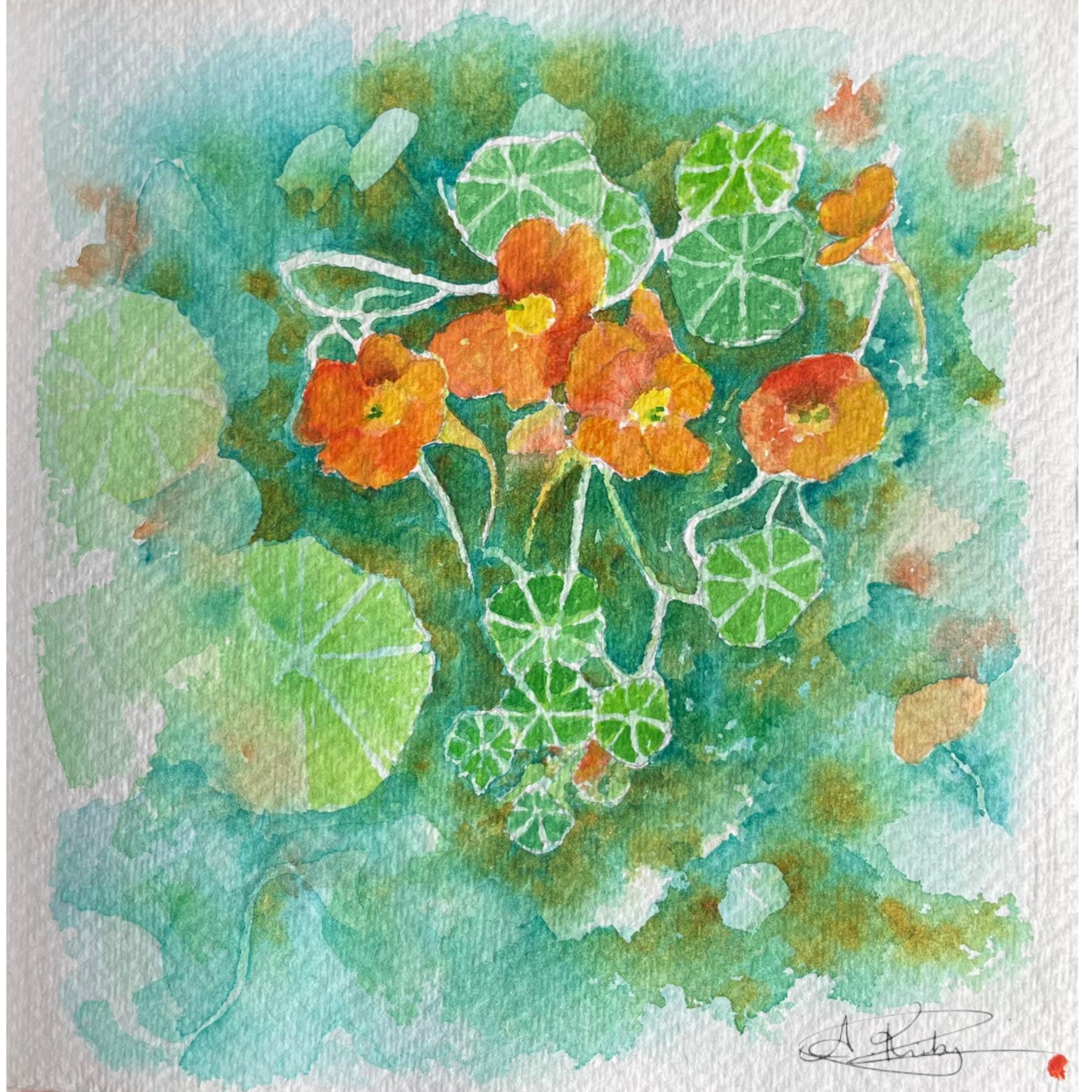
I shall never regret, once upon a time, buying a packet of nasturtium (Tropaeolum majus) seeds to sow in our garden. They are some of the most cheerful annuals, climbing, tangling, scrambling and cascading among the other plants and flowers in a riot of colour and elegant, lily pad shaped leaves. They cannot help but look art nouveau. They are profuse self-seeders, which might put some people off, but they’re guaranteed to make an appearance every year with zero intervention. We originally started out with yellow and acid-orange flowers, but thanks to the wonders of cross-pollination, we now have a huge variety of colour combinations! (See images below).
They’re a fantastic food source for pollinating insects and it’s wonderful watching bees nestling into the pollen cup and buzzing contentedly from flower to flower. They are also beloved by cabbage white butterflies (Pieris rapae), who lay their eggs on the underside of the leaves. These caterpillars can double their biomass in the space of a day if their food source is plentiful. Personally, I’m more than happy to share our nasturtiums with these little fellows.
As cruel as it sounds, nasturtiums can also be used as a sacrificial plant when growing certain vegetables and flowers, as they attract blackfly in abundance, hence the term sacrificial – they really do lay waste to these plants once they get a foothold. The more euphemistic term ‘companion’ plant may also be used here.
The flowers, leaves, stems and seed pods are all edible and delicious in salads and stir fries, made into pesto, or even pickled, like capers (see image below). They are a versatile plant with an intriguing, peppery flavour. The only thing I don’t particularly like is the smell that’s released when you pick the leaves, which is a fantastic defence mechanism and very effective at limiting this hominid’s overgrazing.
In Welsh, nasturtiums are called Meri a Mari and/or Capan Cornicyll (dunce’s hat) – not a particularly nice name. I think a translation for pixie hat would be much more suitable – het picsi or het pwca(?!). Apparently, the Swedish botanist and taxonomist Carl Linnaeus named the genus, tropaeum, from the Greek for trophy, tropaion, inspired by the Roman custom of erecting a trophy taken from their vanquished foes – the flowers reminding Linnaeus of blood stained helmets. Again, some truly delightful imagery. I’m firmly in the pixie hat corner.
Some random nasturtium facts
- Tropaeolum, native to South and Central America, were introduced into Europe in the 1600s.
- They were given their common name, nasturtium, for their similarity to watercress (nasturtium officinale) and often used like cress in salads.
- Some varieties are grown for their tuberous roots, such as Mashua (Tropaeolum tuberosum), an ancient Incan crop, and still a popular root vegetable today in the Andes, where it is also used as an aphrodisiac.
- Combined with horseradish root, nasturtiums are used to make a herbal antibiotic, Angocin Anti-Infekt N. A memorable name, if ever there was one.
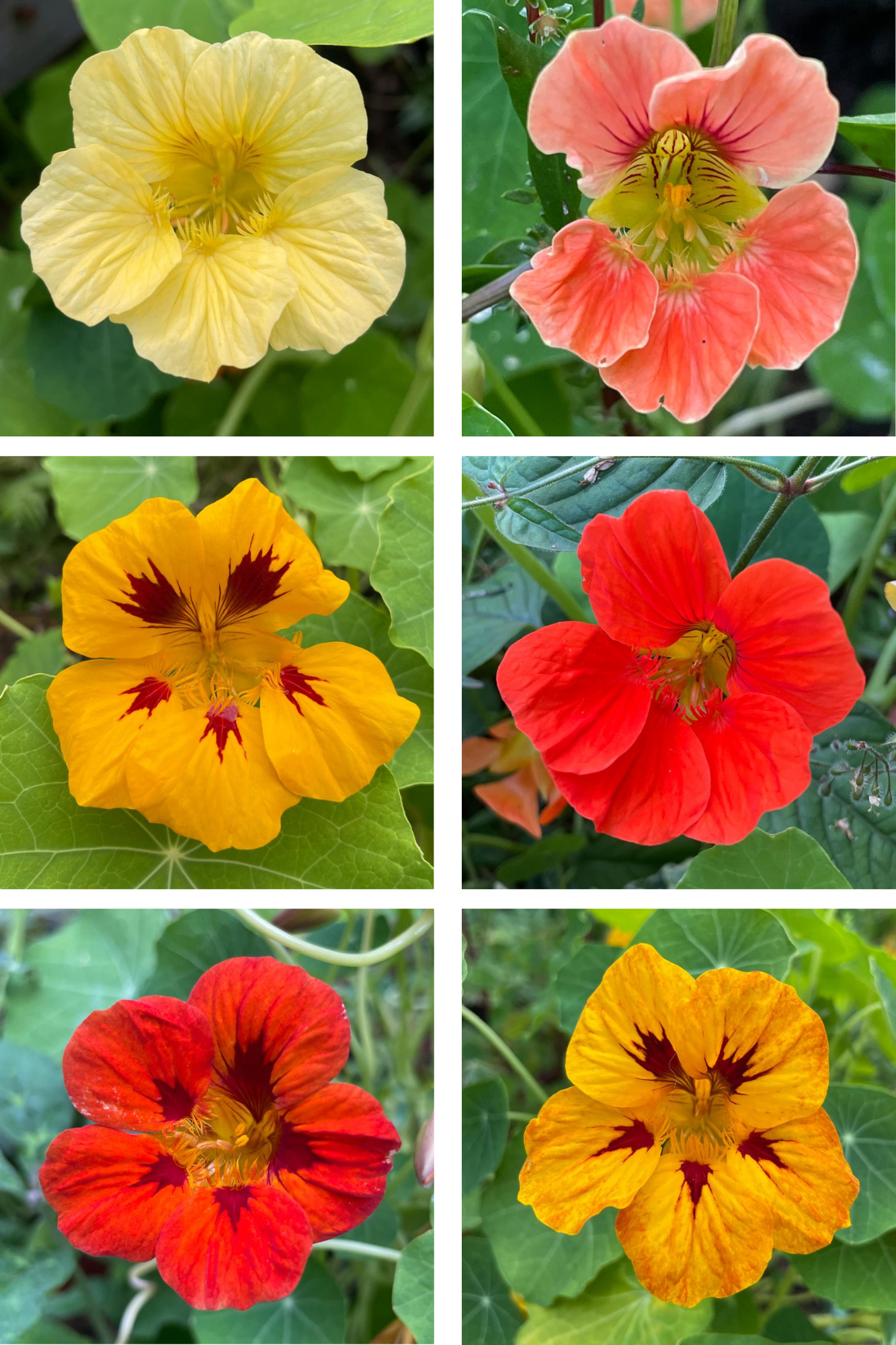
Above: some examples of the colour varieties as a result of cross-pollination.
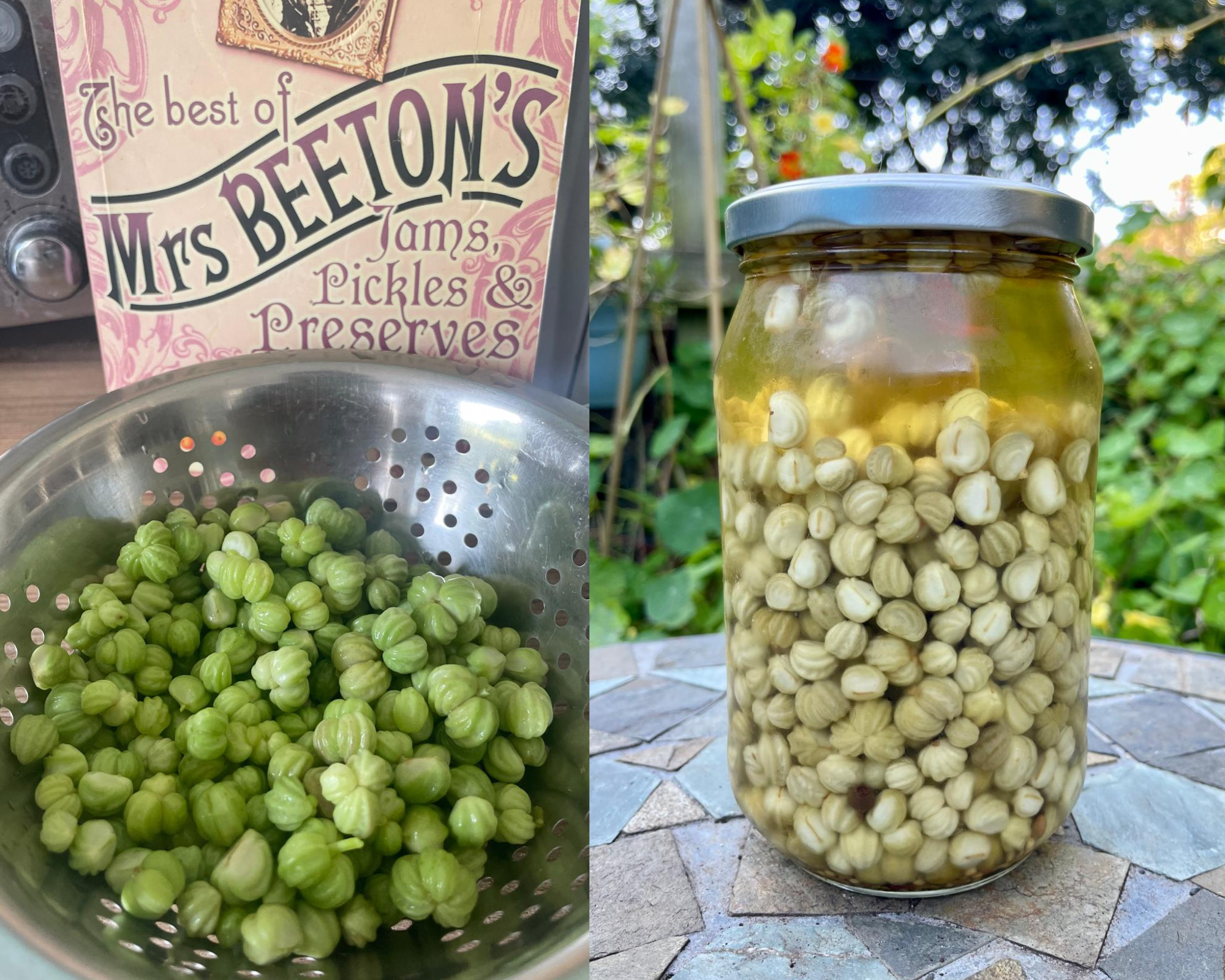
Above: delicious, pickled nasturtium seed pods in a spiced vinegar.
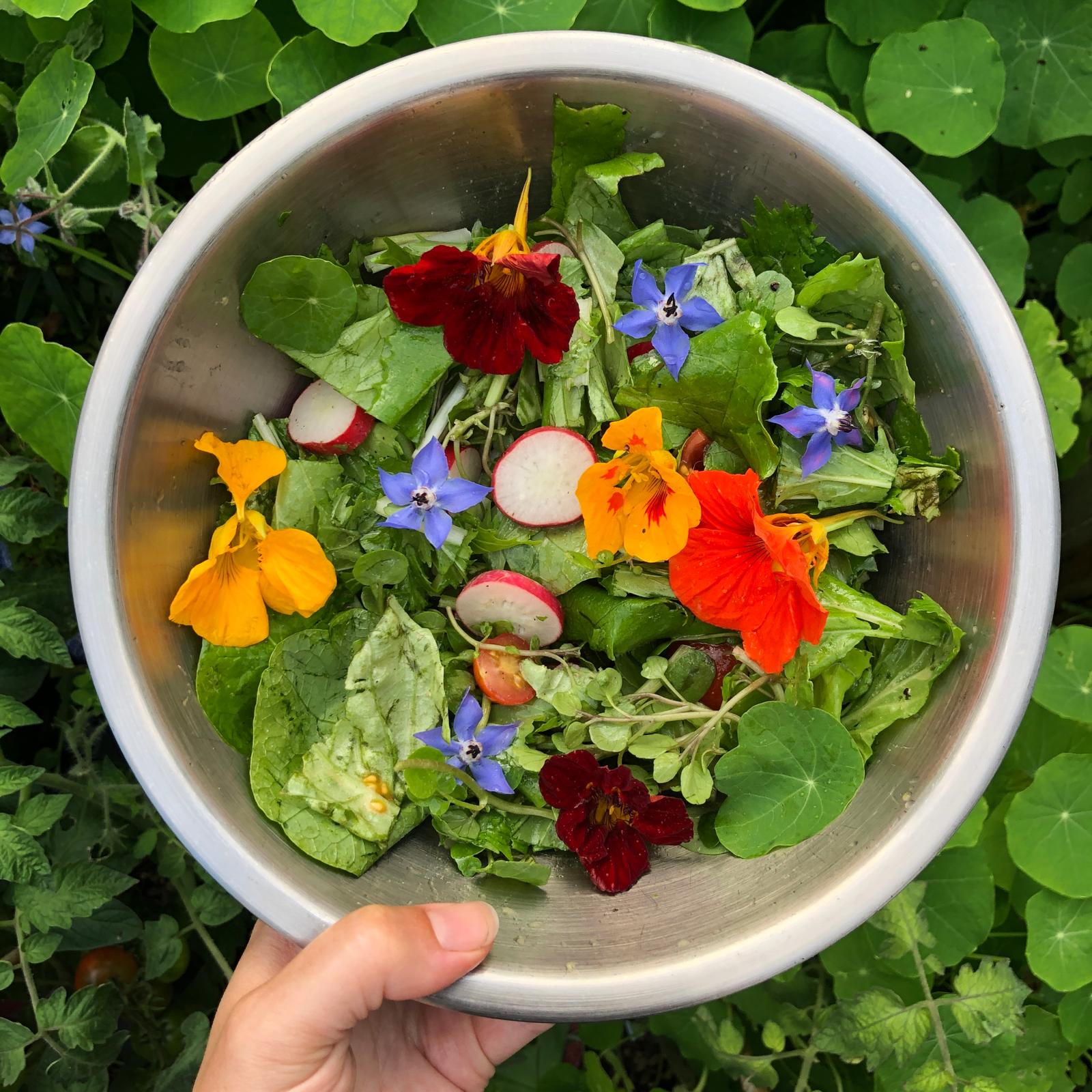
A colourful salad picked fresh from the garden with zero travel miles – just a few steps to the garden and back! With nasturtium leaves and flowers, borage flowers, watercress, mizuna, radishes and tomatoes.
 angie kirby
This is fascinating! The painting is gorgeous.
Aw, thank you Sal! 🙂 xx